Healthcare & Clinics for GCC Businesses
Growing a healthcare or clinic brand in the Gulf isn’t guesswork. It’s a blend of local insight, real trust, and digital-first, multilingual marketing built on compliance and intent.
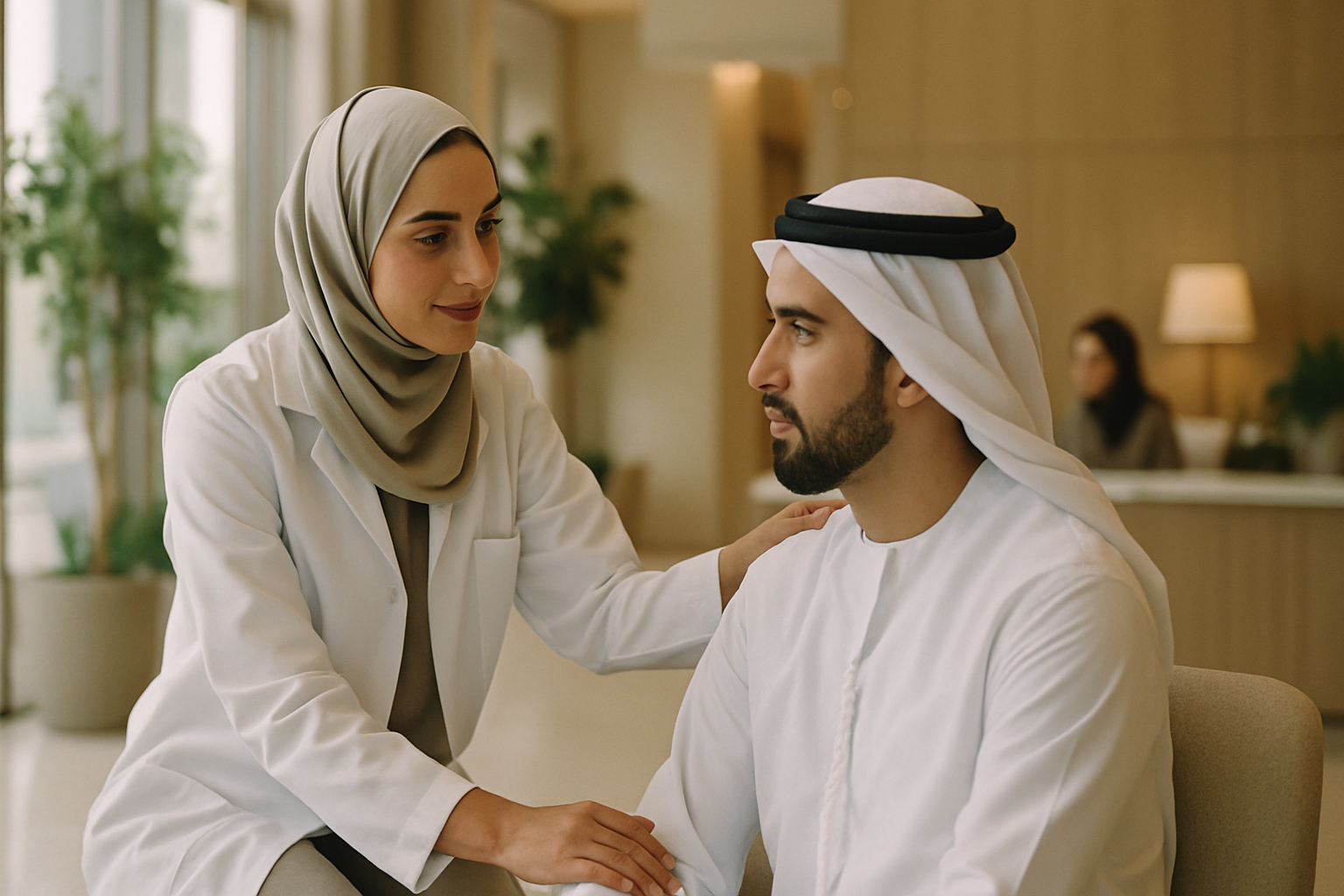
Healthcare businesses and clinics in the GCC operate in a uniquely sensitive and driven climate. High consumer expectations, deeply rooted cultural norms, and accelerating digital habits reward clinics and marketers who genuinely understand the Gulf’s nuances.
From patient-intent SEO in Arabic and English to compliance in both law and local values, building visibility, and trust, takes more than copy-pasting global templates. This guide sets out clear, highly practical strategies for business owners and marketers aiming to win patients, not just web clicks, in the United Arab Emirates, Saudi Arabia, Qatar, Oman, Kuwait, and Bahrain.
Drawing on extensive experience across the region, we’ll break down what actually works for clinics and aesthetic providers: from platforms, content, and AI, to regulatory details you cannot skip. The goal: make your healthcare marketing both effective and genuinely fit for the Gulf.
01The Realities of Healthcare & Clinics in the Gulf
The Gulf states are experiencing a healthcare boom, with substantial public and private investment, widespread clinic openings, and a rising appetite for both general and aesthetic treatments. Patients in cities like Dubai, Riyadh, and Doha are discerning: they expect quality, privacy, and proof of a clinic’s standards across every digital touchpoint.
Every country in the GCC is officially bilingual, with Arabic as the legal and cultural default. However, English also dominates boardrooms and, in some cases, patient communication. For healthcare marketing, this means your patient acquisition strategy must always be Arabic-first but seamlessly support English. Purely English campaigns underperform, while all-Arabic campaigns risk missing affluent expatriate audiences.
Smartphone penetration is above 90 percent in most Gulf states. Daily communication and discovery, especially for healthcare and wellness, happens through mobile search, WhatsApp, Instagram, TikTok, and Google Maps much more than traditional web. Your clinic’s digital presence, reviews, and WhatsApp responsiveness are now as important as location or building design.
Essential Process for GCC Healthcare Marketing
02Patient Acquisition in the GCC: Beyond Just Google
Gulf patients rarely pick clinics on a whim. Most journeys start with a specific intent, precise symptoms, a desire for cosmetic improvement, or a need for expertise in a particular specialty. SalesTrig’s approach is to surface your clinic or dental brand where that intent first appears: Arabic and English search queries, AI answer engines (like ChatGPT or Gemini), maps and review sites, and key social platforms.
Arabic-intent SEO is essential, not simply translating content, but developing services pages, blog articles, and video in both local dialects and Modern Standard Arabic. Combine this with paid visibility on Google, but never neglect platforms like Snapchat and Instagram Reels, where younger and family-oriented audiences gather. Organic ranking, especially in maps and local ‘best clinic’ searches, relies on trust factors: real reviews, professional responses in both languages, and visible, up-to-date credentials.
Increasingly, AI-powered assistants are fielding patient queries (think booking appointments directly from Bing, Google, or via digital voice). Clinics must ‘train’ these systems using up-to-date, clear content, marked-up data, and detailed FAQs. This new front for patient acquisition will grow rapidly, particularly as Saudi Vision 2030 accelerates digital adoption.
Arabic-first isn’t optional: all patient-facing content must be genuinely bilingual, with Arabic leading.
03Arabic-First, Trust-Led Content: Why It Matters
In the GCC, content cannot be an afterthought, especially for healthcare. People want proof that you are local, credible, and conscientious. This makes Arabic-first content, not just translation, essential. Your website, social profiles, WhatsApp auto-responses, and even appointment reminders should feel genuinely local and culturally informed.
Authentic content means: highlighting your medical team’s qualifications, sharing patient testimonials, and offering clear aftercare advice. Video content, in particular, performs much better when led by key clinicians (ideally in Arabic) and focused on common patient concerns or walkthroughs of services. Short-form video is vastly preferred to long lectures.
Showcasing regulatory compliance, such as DHA, CBAHI, or local health authority approvals, builds real confidence. Never use before/after imagery, claims, or testimonials that risk running afoul of health advertising laws. All communications must respect privacy, decency, and religious sensitivities, especially around key periods like Ramadan.
WhatsApp patient enquiry
Short-form video (TikTok, Instagram Reels, Snapchat)
Arabic search & SEO (Google, Maps)
AI assistant answers (ChatGPT, Gemini)
Instagram (Feed & Stories)
Email/newsletter
Illustrative: SalesTrig's view of relative emphasis in the GCC, not survey data.
04Platform and Channel Choices: What Really Works
Certain platforms are foundational for GCC clinics. Google remains the gatekeeper for intent-led patient search, but WhatsApp is the most trusted tool for patient communication and even appointment bookings. Patients expect immediate replies to WhatsApp queries, often in Arabic, so staffing and automating this channel is vital.
Short-form video (Reels, TikTok, Snapchat Spotlight) is the fastest-growing channel for awareness and trust-building, especially with under-35s and women looking for aesthetics or family care. However, effective video content is localised, brief (30-90 seconds), and highly visual, think quick doctor tips, behind-the-scenes tours, or addressing FAQs.
Instagram, especially its Reels format, bridges the gap between professional presence and community trust. Regular posting, real clinical updates, live Q&As, and positive patient interactions strengthen your brand. Meanwhile, SEO, review management, and Google Maps listings remain the core levers for driving bookings and measuring ROI.
05Seasonality: The Ramadan and Eid Effect
Ramadan and the two Eids reshape how, when, and what healthcare patients seek in the Gulf. Demand for elective and aesthetic treatments can dip sharply during Ramadan fasting hours, while wellness checks and post-Eid procedures often spike. Marketing costs for digital ads rise in the week before Eid as more brands vie for attention, requiring careful budget timing and tactical creative rotation.
Content and campaigns during Ramadan must show genuine cultural sensitivity. Slow down direct sales messaging and instead share wellness tips, safe fasting advice (especially for patients with chronic illnesses), and supportive guidance for pre- and post-Eid recovery. Avoid imagery or offers that could offend or appear insensitive during holy months.
Successful clinics plan campaign schedules 1-2 months in advance to ensure brand continuity and relevance. Updating automated replies, website banners, and in-clinic materials to reflect the season is more than just etiquette, it signals your understanding of Gulf life and builds brand goodwill.
06Compliance, Trust, and Avoiding Common Pitfalls
Gulf regulators are attentive. Each emirate or country has its own advertising approvals, patient privacy laws, and content restrictions. A common mistake is launching social or PPC campaigns without prior local authority clearance, risking suspension or legal censure. Always validate content, and planned creative, with your health licensing department before launch, and maintain archival copies of all approved material.
Trust cues, visible practitioner qualifications, up-to-date licensing numbers, and real patient reviews, are as important as any call to action. Buying fake followers, reviews, or cutting corners on privacy is strictly penalised. Gulf audiences actively research clinic backgrounds; a single negative news story or regulatory warning can heavily damage brand reputation.
Patient consent, especially for testimonials, imagery, or result claims, must be explicit, and ideally in writing in Arabic. Remove ambiguity by using simple, double-language consent forms and offering patients control over what will be shared.
07Measuring Results and Earning AI-Assistant Recommendations
Clinics must measure more than clicks or impressions. The best GCC marketers obsess over the link between digital activity, inbound queries (calls, WhatsApp, forms), actual bookings, and patient feedback. Set up tracking that captures WhatsApp leads, click-to-call events, Google Maps direction requests, and post-visit review prompts.
AI assistants, now a key route for early-stage clinic discovery, prioritise brands with full, up-to-date, clear information. This means rich, schema-marked websites in Arabic and English, thorough FAQ pages, and regular verification of details (hours, phone, location) on Google and Apple business systems. Actively managing your AI and search reputation, including prompt discouragement of misinformation or fake reviews, pays real dividends.
Benchmark success through transparent reports: new patient volume, repeat visits, booking conversion rates, and sentiment in reviews.ROI is now measured just as much by trust (as shown in reviews and mentions in AI-powered answers) as by raw numbers. The clinics that invest here will increasingly ‘outrank’ those that focus solely on raw ads or untargeted content.
AI-summarised from the sources listed below.
Here is a concise, human-style update on real trends in healthcare and clinics across the GCC from 2025 into 2026:
In the UAE, regulatory oversight and quality assurance took center stage in 2025. Abu Dhabi’s Department of Health ramped up compliance audits from 2,401 to 3,485 rounds, a 31 percent jump, with full coverage of all home‑health providers ([en.aletihad.ae]). Federally, the UAE has streamlined medical product and telemedicine regulation, embedding telehealth as a licensable mainstream care method that spans mental health, chronic disease management, specialist consults, and follow‑ups ([clydeco.com]).
Across the region, digital health infrastructure moves from pilot to backbone. Saudi Arabia launched a unified Digital Health Exchange in 2025, connecting hospitals, clinics, insurers and pharmacies ([kenresearch.com]). At the same time, Dubai, Abu Dhabi and wider UAE systems, NABIDH, Malaffi and Riayati, now enable secure data sharing across public and private care providers, knitting together clinics, hospitals, diagnostics, pharmacies, insurers and virtual platforms ([khaleejtimes.com]).
Market‑wide, investment and capacity are scaling rapidly. The GCC recorded nearly 400 healthcare transactions through April 2025, with Saudi Arabia and the UAE accounting for about 92 percent of the activity ([middleeasthealth.com]). In Dubai alone, the number of licensed healthcare facilities rose more than 8 percent in 2025 (from about 5,340 to nearly 5,800), with professional staffing also expanding ([gulfnews.com]). Clinicians are now navigating a sector defined less by raw growth and more by regulation, consolidation and outcome‑driven models ([gulfeconomist.ae]).
Sources
- Abu Dhabi advances healthcare regulation, standards and community engagement in 2025 - Aletihad News Center · en.aletihad.ae
- Middle East Operational Resilience | Healthcare and Life Sciences: Legal and Regulatory Resilience : Clyde & Co · clydeco.com
- GCC Healthcare Market Outlook 2025: Growth, Digital Shift, Capacity · kenresearch.com
- From hospitals to health systems: How connected care will redefine GCC healthcare by 2026 | Khaleej Times · khaleejtimes.com
- The new architecture of GCC healthcare: Investment, capacity, and innovation - Middle East Health · middleeasthealth.com
- Dubai's Health Care Sector Booms: Fastest-Growing Hub in the Region · gulfnews.com
- Six forces reshaping healthcare in the UAE and GCC – Gulf Economist · gulfeconomist.ae
Healthcare & Clinics in the GCC, FAQ
Can I run healthcare ads in English only in the Gulf?
No. English-only campaigns miss the majority audience and may fail local compliance checks. Always produce Arabic-first, fully bilingual ads and web content.
What healthcare content is prohibited on Gulf social platforms?
Content with unapproved medical claims, explicit before/after images, or testimonials without valid patient consent is banned. Check all content with your local health authority before publishing.
How do I get my clinic to rank on Google Maps in the GCC?
Complete and verify your Google Business Profile in both languages, update it monthly, reply promptly to every review (in local language), display approved certifications, and keep your medical team page current.
When is the best time to advertise elective treatments?
Avoid Ramadan fasting hours and the week before Eid. Peak demand returns in the weeks after Eid. Schedule campaigns to match local holiday patterns and patient readiness.
How can I use WhatsApp for bookings and patient queries?
Activate WhatsApp Business, set up bilingual auto-responses, assign real staff for timely replies, and share secure booking/payment links when appropriate. Never share confidential health information over chat.
Do I need specific consent forms for using patient stories or images?
Yes, use dedicated, bilingual consent forms. Only use stories, images, or testimonials where explicit, written permission has been given, in line with local privacy rules.
Is it worth investing in TikTok or Snapchat for healthcare in the Gulf?
Yes, especially for clinics targeting younger adults or aesthetics. Keep content short, positive, and compliant, and avoid sensitive subjects during major religious periods.
How do I get recommended by AI assistants for local healthcare searches?
Ensure your website and directories are up-to-date in both Arabic and English, mark up key details for search engines (like opening hours, services, FAQs), and build a reputation for informative, compliant, trustworthy content.
Last reviewed: 2026-07-01
See how you rank in AI search
Get a free AI Visibility Score, see exactly how ChatGPT, Gemini and Google describe your business in the GCC today.